> For the complete documentation index, see [llms.txt](https://docs.plura.io/ja/llms.txt). Markdown versions of documentation pages are available by appending `.md` to page URLs; this page is available as [Markdown](https://docs.plura.io/ja/fn/comm/newfilter/net.md).
# ネットワーク
{% hint style="info" %}
エージェントがインストールされているネットワーク機器で発生するすべてのイベント ログを確認できます。
フィルターを登録すると、ログ全体にあるログに基づいて検出し、ダッシュボードとフィルター探知にさらされます。\
\
▶ フィルター登録支援対象
1. Firewall - Juniper, Secui
2. IPS - Sniper, Sonicwall, Fortigate
3. WAF - Barracuda, Webfront-k
4. Switch - Cisco, Huawei
5. VPN - Secuway
※ 引き続き支援拡大中···
{% endhint %}
 ### 1. メニュー位置
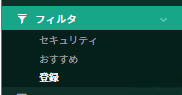
* 左側のナビゲーション バー メニューのフィルター > 登録メニューをクリックします。
### 1. メニュー位置
* 左側のナビゲーション バー メニューのフィルター > 登録メニューをクリックします。
 ### 2. 登録ボタンクリック
 ### 3. フィルター分類選択
 ### 4. グループ選択
### 5. オペレーティングシステムの選択
### 6. チャンネル選択
### 4. グループ選択
### 5. オペレーティングシステムの選択
### 6. チャンネル選択
 ### 7. フィルター名入力
* 登録するフィルターの名前を入力します。
### 8. フィルター説明入力
### 9. フィルターの危険度(高い/中間/低い)指定
* 登録するフィルターの危険度を自分で設定することができます。
### 10. フィルター動作時間(24時間/時間設定)の設定
### 7. フィルター名入力
* 登録するフィルターの名前を入力します。
### 8. フィルター説明入力
### 9. フィルターの危険度(高い/中間/低い)指定
* 登録するフィルターの危険度を自分で設定することができます。
### 10. フィルター動作時間(24時間/時間設定)の設定
 * たとえば、退勤時間以降から出勤時間までのフィルター動作を確認したい場合は、「時間設定」を選択し、希望する時間を入力します。
### 11. 動作設定
* 下段にある情報入力領域の追加ボタンをクリックすると、データ値を入力して該当する値を含めるか除外することができます。
* フィルター登録時には過探/誤探が発生することがありますので担当者に確認の上、登録することをおすすめします。
* ネットワークフィルターを登録する際には、分類をetc.と選択する必要があります。
* 以下は、ネットワーク フィルターの登録例です。
* たとえば、退勤時間以降から出勤時間までのフィルター動作を確認したい場合は、「時間設定」を選択し、希望する時間を入力します。
### 11. 動作設定
* 下段にある情報入力領域の追加ボタンをクリックすると、データ値を入力して該当する値を含めるか除外することができます。
* フィルター登録時には過探/誤探が発生することがありますので担当者に確認の上、登録することをおすすめします。
* ネットワークフィルターを登録する際には、分類をetc.と選択する必要があります。
* 以下は、ネットワーク フィルターの登録例です。
 ### 12. 動画案内
{% embed url="" %}
### 12. 動画案内
{% embed url="" %}